How E-Invoicing Changes UAE Accounting and Bookkeeping
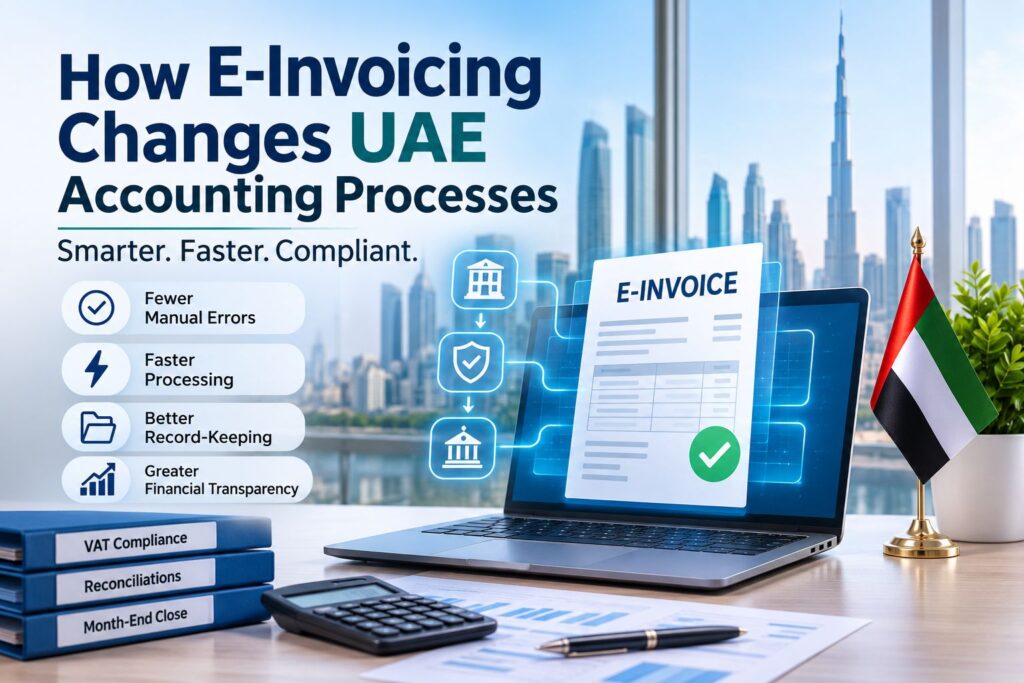
For years, a UAE invoice has been a document: a PDF emailed to a customer, a printout filed in a folder, a line retyped into an accounting system. That model is ending. The UAE is moving to structured electronic invoices that travel between businesses through accredited providers and reach the Federal Tax Authority (FTA) as data. The shift reaches well beyond the sales team. It changes how bookkeepers record transactions, how accountants review them and how finance managers trust their numbers. Choosing the right e-invoicing firm in the UAE has become a practical question for any business that wants to adapt without disruption. The UAE E-Invoicing Framework and Why It Matters The framework rests on Ministerial Decisions 243 and 244 of 2025. Invoices between businesses, and between businesses and government, are created as structured XML files in the PINT AE format. A company sends its invoice data to its Accredited Service Provider (ASP), which validates it and passes it to the buyer’s ASP over the Peppol network. Tax data is reported to the FTA at the same time. The rollout is phased: Business Group Appoint an ASP By Go Live By Revenue of AED 50 million or more 30 October 2026 1 January 2027 Revenue below AED 50 million 31 March 2027 1 July 2027 Government Entities 31 March 2027 1 October 2027 It matters because the invoice is no longer a private document between two parties. It becomes a validated record that feeds tax reporting. Administrative penalties apply once a mandatory date passes, and fines can reach AED 5,000 per month, so readiness is a compliance issue as well as an efficiency one. How E-Invoicing Is Transforming Accounting and Bookkeeping Traditional bookkeeping is largely reactive. Documents arrive, someone keys them in, and errors are found at month end or during a VAT return. E-invoicing flips that order. Data is checked at the moment of issue, so mistakes surface before an invoice leaves the building rather than weeks later. Three practical changes stand out. From Data Entry to Exception Handling When supplier invoices arrive as structured data, accounts payable teams no longer retype invoice numbers, dates and amounts. Routine invoices can flow into the ledger with minimal handling, and staff focus on the exceptions: a rejected file, a mismatched total or a missing purchase order. The skill that matters shifts from typing accurately to investigating quickly. Master Data Becomes a Core Control An invoice can fail validation because a customer’s Tax Registration Number is wrong, an address is incomplete or a tax category is mapped incorrectly. Clean customer, supplier and item records therefore move from a back-office chore to a front-line control. Bookkeepers who maintain this data well will prevent most rejections. Closer Ties Between Systems Sales, purchasing, accounting and tax records have to agree with each other, because the same data now reaches the FTA. This pushes businesses to connect their ERP or accounting software properly and to reconcile more often. Our article on how e-invoicing changes accounts payable and receivable explains what this looks like day to day. Benefits of Digital Invoicing for UAE Businesses The move brings real advantages once the setup work is done. Four of them matter most to owners and finance managers. Fewer manual errors. Automated validation catches missing fields, wrong tax calculations and inconsistent totals before an invoice is exchanged. Faster processing. Invoices are created, validated and delivered in minutes. Approvals and reconciliations speed up because the data is already structured. Better record-keeping. Every invoice, credit note and status message sits in a consistent digital format, which makes retrieval for an audit or a customer query far simpler. Greater financial transparency. Owners see receivables and payables as they stand, which supports sharper cash flow decisions. Take a simple example. A trading company issues 400 invoices a month. If even 3% contain a wrong VAT code or a missing buyer detail, that is 12 corrections a month, each costing staff time and often delaying payment. Validation at the point of issue removes most of that rework. E-Invoicing for Accountants in the UAE Accounting professionals are among the most affected, and the change creates opportunity as well as pressure. E-invoicing for accountants in the UAE means reviewing more than totals. Accountants now need to understand the data standard, check how a client’s system produces it and advise on provider selection, testing and exception routines. In practice, the work expands in a few directions: Readiness assessments that compare a client’s invoicing data against the mandatory fields. System mapping between the client’s accounting software and the ASP connection. Ongoing review of rejected invoices, credit notes and reconciliation differences. Advice on tax treatment, because passing technical validation does not prove that the VAT treatment is correct. That last point deserves emphasis. Validation confirms structure, not judgement. A properly formatted invoice can still carry the wrong tax category, so professional review remains essential. For more on this, see how validation works in e-invoicing. How E-Invoicing Supports VAT Compliance and VAT Filing Automation E-invoicing does not replace VAT obligations. It digitises them. VAT returns, record-keeping rules and tax invoice requirements still apply, but the information behind them becomes cleaner and easier to trace. The FTA has described reduced human intervention, better efficiency and less VAT leakage as goals of the programme. The benefits for compliance are concrete: Invoice data reaches the tax authority in a consistent structure, so the figures in your records and the figures the FTA sees are more likely to match. Reconciling invoices to ledger entries and VAT records is easier, so discrepancies appear earlier instead of during return preparation. Structured data gives auditors a clearer trail from transaction to return. This is where VAT filing automation comes in. When invoice data is complete and coded consistently, the work of assembling a VAT return becomes far more mechanical. Accounting software can group transactions by tax category and total them with less manual adjustment. Advisers expect e-invoicing to be the first step toward wider digital tax reporting,